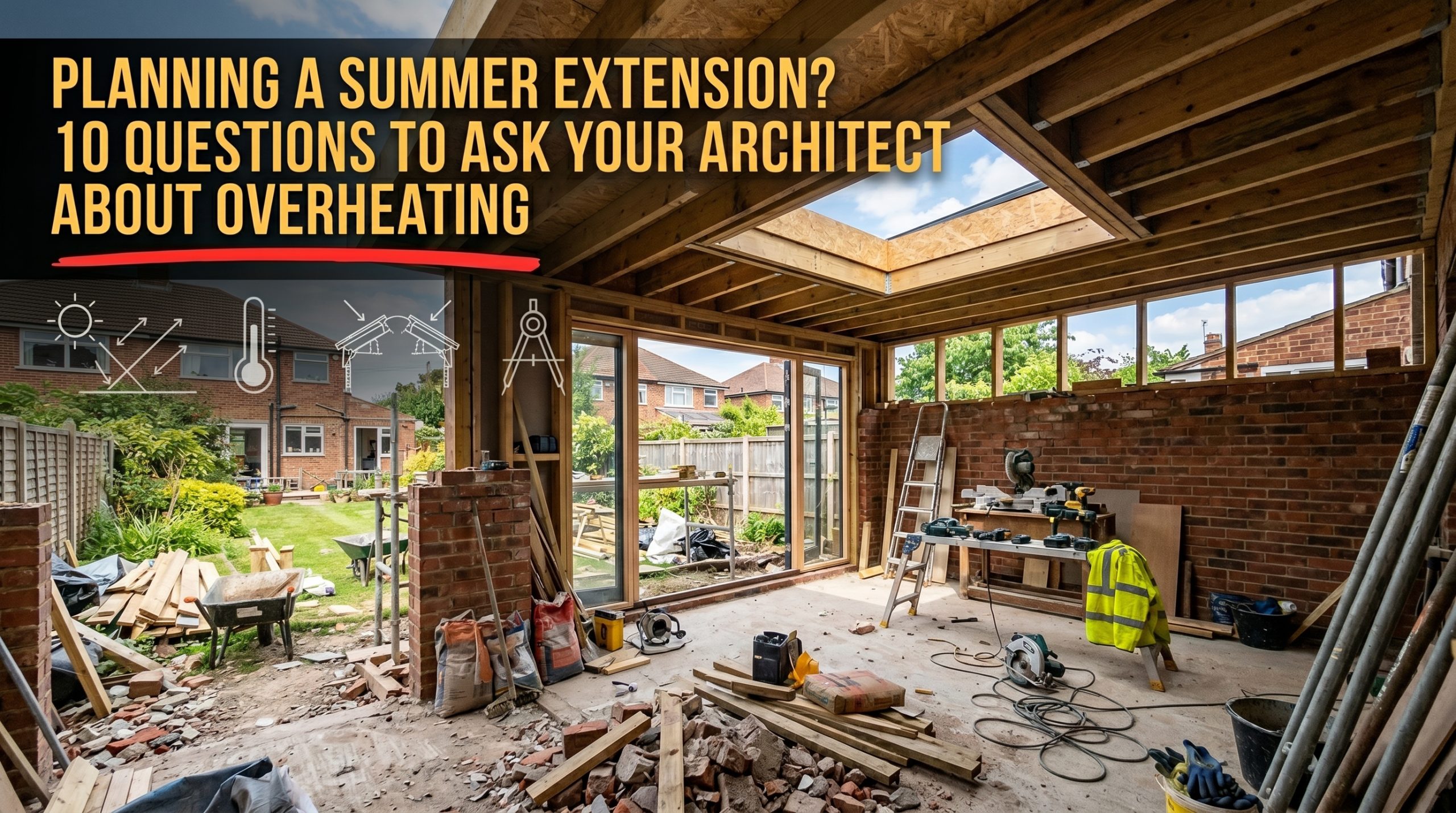

Thinking of renovating your home? It’s important to consider planning permission for home renovation before you begin.
Before picking up that hammer, ask yourself this—do you need planning permission for your home renovation?
Many homeowners dive into building projects without fully understanding the home renovation rules. Sadly, this often leads to delays, fines, or being forced to undo the work—yes, even when the changes feel small.
Knowing when planning permission is required can save you thousands and months of stress.
Not all home changes are covered under permitted development. Some projects—like kitchen extensions, loft conversions, garden rooms, garage rebuilds, roof alterations, and external cladding—may need approval, even if done inside your boundary.
The truth is, planning mistakes are expensive, but avoidable.
That’s why it’s smart to speak with a professional architect like Gordon Evans and his team at YOOP Architects, who can help you navigate the red tape.
In this guide, we’ll reveal the common traps most homeowners fall into—and how to avoid them with ease.
Mistake #1 – Assuming Small Changes Don’t Require Planning Permission for Home Renovation
Many homeowners think minor home renovations—like roof windows, decking or fences—never need planning permission for small projects. However, “permitted development” only covers basic works. If you misjudge this, you may receive an enforcement notice.
- Roof windows: Even a Velux in a non-bedroom space can trigger permission needs if it alters the structure.
- Decking: A low-level deck might qualify, but raised platforms often fall outside “permitted development”.
- Fences: A boundary wall over one metre near a highway, or two metres elsewhere, may demand approval.
Ultimately, checking whether your job is genuinely permitted could save you thousands.
[Read: Shocking North London UK Home Improvement Costs: Save £1,000s With These Tips]
Mistake #2 – Starting Renovations Before Getting Approval
Rushing into home improvements without home renovation planning approval is a dangerous gamble.
First, you risk fines or enforcement notices that force you to undo work. Second, redo costs can spiral. And third, you may face lengthy delays.
- Approval times: Standard applications usually take eight weeks. Faster pre-application advice can halve waiting times.
- Why pre-consultation helps: Discuss your plans with planning officers early. This reduces guesswork and avoids refusal.
By securing approval before swinging a hammer, you protect your budget and your sanity.
Mistake #3 – Not Checking With Your Local Council First
Every local council planning office has unique council renovation rules. Ignoring this fact can stall your project.
Firstly, visit your council’s website or call building control contact points to confirm requirements. Secondly, local flood zones, conservation areas or listed-building status can impose extra conditions.
- Quick checks: Many councils offer interactive maps online.
- Benefits of pre-application advice: Written guidance reduces costly re-submissions and clarifies expectations.
In short, saving time up front prevents frustration later.
Mistake #4 – Hiring Contractors Who Ignore Planning Rules
Rogue builders and unlicensed contractors often skip planning permission for home renovation steps. Yet legal responsibility always rests with you, the homeowner.
To avoid compliance issues:
- Verify credentials: Ask for proof of registration with recognised bodies (e.g., RIBA, ARB).
- Spot red flags: Extremely low quotes, lack of written contracts or evasive answers about planning history.
Always choose tradespeople with a track record of renovation compliance. That way, you minimise risk and stress.
Mistake #5 – Confusing Planning Permission with Building Regulations
Many confuse building regulations vs planning permission, assuming one covers the other. This error could mean incomplete approvals.
Planning permission for home renovation deals with land use, appearance and neighbour impact.
Building regulations ensure structural safety, insulation, fire safety and accessibility.
Often both are needed—for example, a loft conversion usually needs planning permission and building-control sign-off. Failing to secure either may invalidate insurance and resale value.
Mistake #6 – Ignoring Neighbours and Property Boundaries
Overlooking party wall agreements and boundary disputes can doom even a well-planned extension.
- When to inform neighbours: Two months’ notice is required for party wall works.
- How objections delay projects: Neighbours can issue a Section 78 notice, forcing mediation.
Solutions include professional mediation or issuing proper notice under the Party Wall Act. Respecting boundaries prevents costly delays and preserves neighbourly goodwill.
[Read: Building Extensions: What Neighbors Can and Can’t Do]
Mistake #7 – Skipping Paperwork After Renovation Completion
Finally, many skip completion certificate or final building-control sign-off. As a result, they lack proof of lawful works.
- Why final inspections matter: They confirm compliance with building regulations and planning conditions.
- Selling your home later: Estate agents and solicitors will flag missing certificates, scaring off buyers.
- Getting retroactive approval: If you missed sign-off, apply for a certificate of lawful development—though this can take months and incur extra fees.
By avoiding these 7 pitfalls in planning permission for home renovation, you save time, money, and stress. Next, learn how to streamline your application and keep your project on track.
[Read: UK Planning Permission Applications in North London Fail for These 3 Reasons – Fix Them Today]
How to Avoid All These Mistakes: Expert Tips for Smooth Home Renovation Planning
Applying for planning permission for home renovation doesn’t need to feel overwhelming—if you get it right from the start.
Whether you’re planning an extension, loft conversion, or internal alterations, avoiding delays starts with a clear plan.
- Consult your local authority early
Every council interprets rules slightly differently. A short call or online check with your local planning office can reveal surprising restrictions—even on seemingly small works.
- Work with a planning consultant or architect
An experienced professional like Gordon Evans helps you prepare detailed plans, fill out accurate forms, and anticipate objections. They’ll know exactly how to apply for home renovation planning permission the right way.
- Keep clear, written documentation
Always record advice received, including emails or meeting notes. This ensures everyone stays accountable and helps resolve future disputes.
By using a renovation planning checklist, you can avoid unnecessary stress. Better still, it keeps your project on schedule and within budget—exactly where you want it.
Final Thoughts: Planning Ahead Saves You Time, Money, and Stress
Renovating your home is exciting—but without the right approach, it can also become costly and chaotic. These home renovation planning tips are your safety net.
- Start with research and a strong strategy
- Involve experts early, not after a problem arises
- Keep neighbours informed and documents in order
By following this guidance, you’re avoiding renovation delays and saving yourself from future headaches.